
Please note that recruitment for this study is now complete: we hope to publish the results here when they are available.
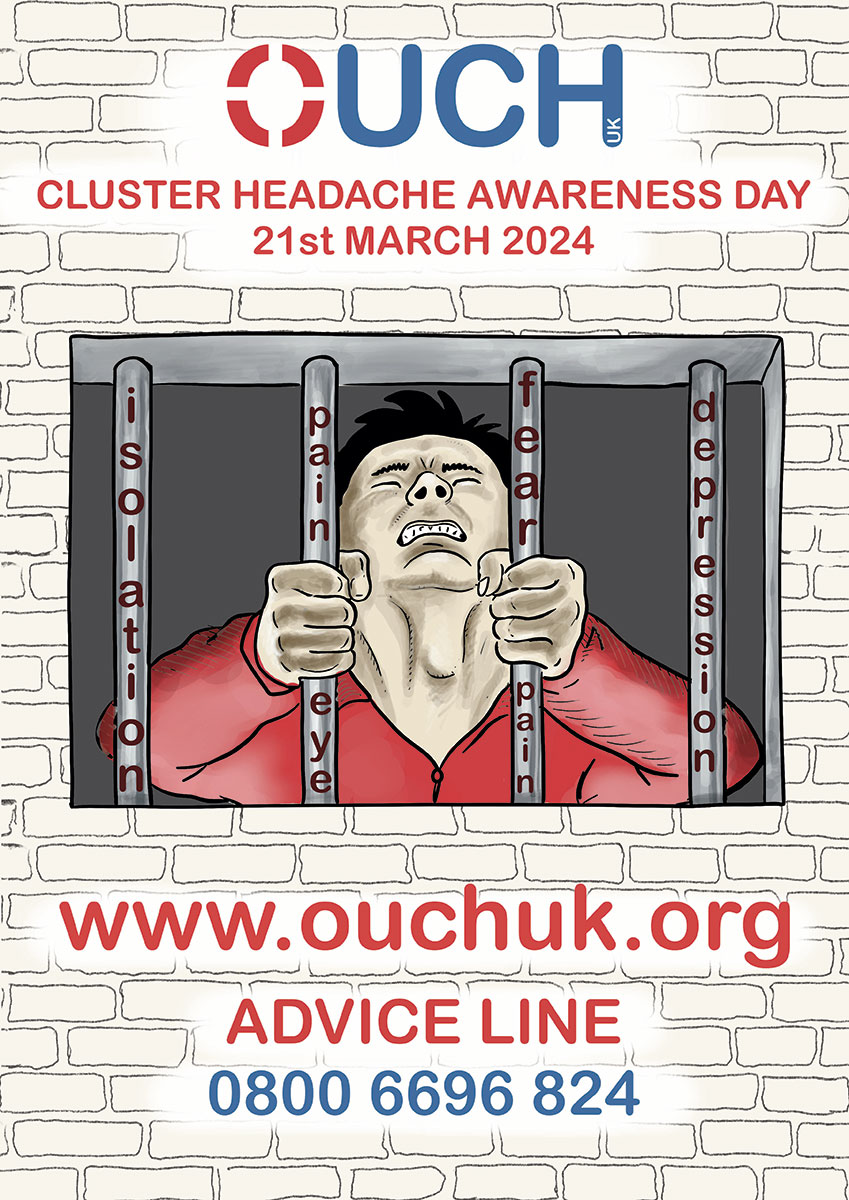
Living with Chronic Cluster Headache means there is no respite from attacks of excruciating pain day and night, year after year. This study aims to examine how sleep deprivation affects the quality of life of people with Chronic Cluster Headache. There is a recruitment poster here and a pdf of the following lay summary further below.
Lay Summary
October 2025; Version Number 2
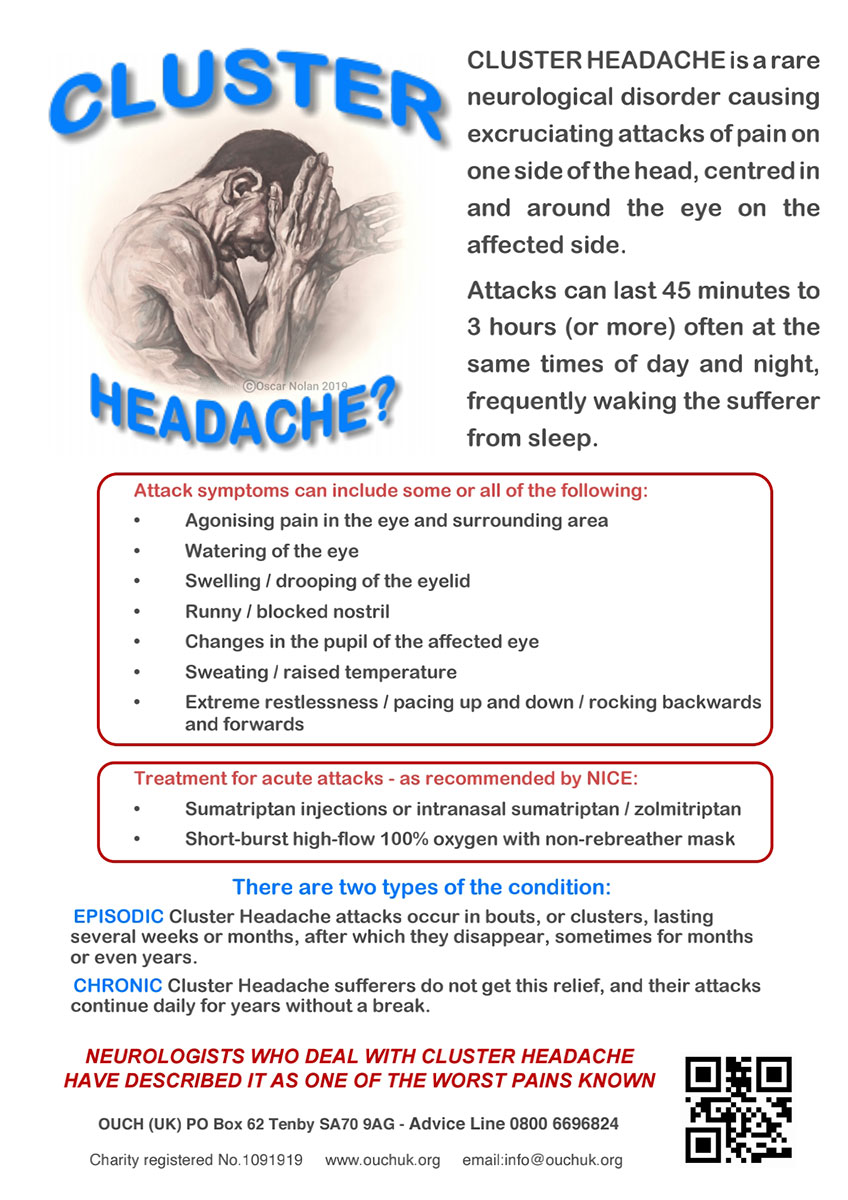
Cluster Headache is a rare and excruciatingly painful kind of head pain. The main symptoms are bouts of one or multiple daily attacks of agonising pain centred around one eye, each lasting from 45 minutes to 3 hours, or even more. Attacks are often accompanied by a runny or blocked nose, watery eye and feelings of intense agitation. They can occur at the same time(s) of day and frequently at night during sleep. About 80 to 90% of sufferers have Episodic Cluster Headache (ECH), with bouts of attacks that can last for weeks or months at a time, followed by periods of remission. About 10 - 20% of sufferers have no significant pain-free breaks, and this condition is known as Chronic Cluster Headache (CCH).
When the pain attack happens at night, sufferers wake up and cannot go back to sleep for the duration of the pain. Many CCH sufferers have trouble sleeping and this makes them feel very tired and makes it difficult to do things during the day, such as work, study or even relax. There is no research looking at how people with CCH sleep and how they cope with poor sleep.
This study aims to find out what sleep is like for CCH sufferers and how poor sleep affects their life. In the beginning, we will ask participants to complete four questionnaires (either online or via post) about their sleep, pain, and feelings. We will then ask them to wear a special watch called an actigraph that measures sleep at night. No daytime naps will be recorded. They will also be asked to keep a daily sleep diary to record their night’s sleep for a week. They will also talk with a researcher about their experiences of sleep in an online interview which will last for about an hour.
We are looking for participants who live in the UK, are over 18 years old and have been diagnosed with CCH by a neurologist.
By listening to CCH sufferers and looking at their sleep data, the study hopes to understand how sleep is affected in CCH sufferers. This may help doctors and psychologists find better ways to support and treat people with CCH in the future.
The results of the study will be written up for the University of East Anglia as a report which will be also published in a science journal.
Interested?
To participate, you need to be:
- Fluent in English
- A UK resident
- Diagnosed with Chronic Cluster Headache
- Able to provide GP details (so we can ensure your safety during the study)
- Not currently pregnant or breastfeeding
- Not a night shift worker
This study is part of doctoral research at the University of East Anglia.
Contact the lead researcher, Kotryna Ragazinskaite, at k.ragazinskaite@uea.ac.uk to find out more.
As a token of our appreciation, we'll be making a £100 donation to the OUCH charity.
The Study has been approved by the Faculty of Medicine and Health Sciences Ethics Committee at the University of East Anglia Ethics Approval: ETH2425-2478
| Attachment | Size |
|---|---|
| Lay Summary | 261.02 KB |
| Recruitment Poster | 201.51 KB |